
The Royal Castle of Santa Catalina is one of the most representative historical monuments in Santa Cruz de La Palma and a key piece of the defensive system that protected the island during the centuries of Atlantic expansion. Its construction began in 1683, after several failed attempts to fortify the capital of La Palma against the constant attacks of corsairs and pirates that threatened the archipelago’s port cities.
The strategic importance of Santa Cruz de La Palma was undeniable. Its port, considered one of the safest in the Atlantic in the 16th century, served as a stopover for trade routes between Europe and the Americas. This prominence made the city a target for looting, such as the attack by the French pirate François Le Clerc, known as “Jambe de Bois” (“Peg Leg”), who in 1553 ravaged a large part of the city. Following episodes like this, the Spanish Crown decided to reinforce coastal defenses, and in time, the Royal Castle of Santa Catalina was built.
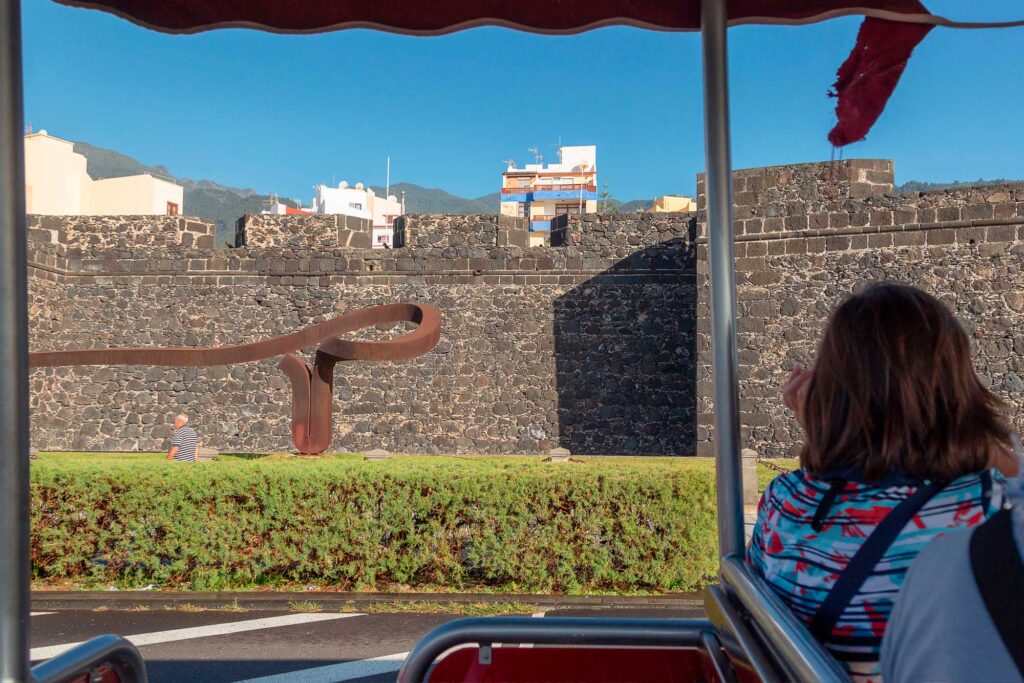
The castle was designed following the model of a square-plan Renaissance fortress with corner bastions, inspired by Italian fortification techniques. Its robust structure, made of local volcanic stone, was built to withstand artillery fire and provide a wide field of vision toward the sea. For over two centuries, it was the main defense of the capital and the military command center of the island.
Inside, the castle housed troop quarters, ammunition stores, and a chapel dedicated to Saint Barbara, the patron saint of artillerymen. Although it never faced a major attack after its construction, its sheer deterrent presence helped protect the port and the city.
Over time and with the modernization of military techniques, the fortress lost its defensive function. However, its historical and heritage value has remained intact. Declared a Property of Cultural Interest, the Royal Castle of Santa Catalina is now a space open to visitors, who can walk its walls, admire its cannons, and enjoy one of the most evocative views of the bay.
The castle not only recalls the need for defense in past eras but has also become a symbol of the resistance and shared history of the people of La Palma, uniting centuries of memory within its stone.