
The balconies of Santa Cruz de La Palma are one of the most recognizable symbols of the capital of La Palma and a living testament to the cultural and architectural richness that developed on the island since the 16th century. Their history is closely linked to the city’s development as a major Atlantic port, where trade routes converged between Europe, Africa, and the Americas.
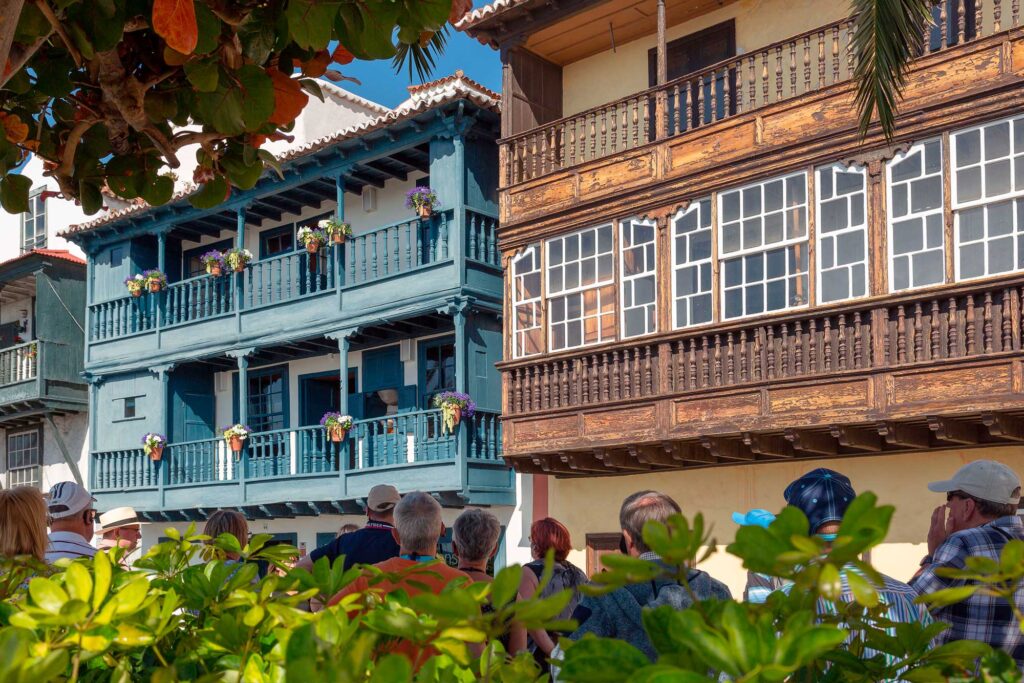
Starting from the city’s founding in 1493, wealthy families began to build two and three-story houses in the area near the sea and along the current Avenida Marítima. These homes, many of them owned by merchants, notaries, and sailors, were designed with a practical but also ornamental character. The balconies, made primarily of teak wood—extracted from the Canarian pine, which is resistant to time and humidity—served several functions. On one hand, they were used to ventilate and provide light to the houses; on the other, they became a distinctive element of social prestige.
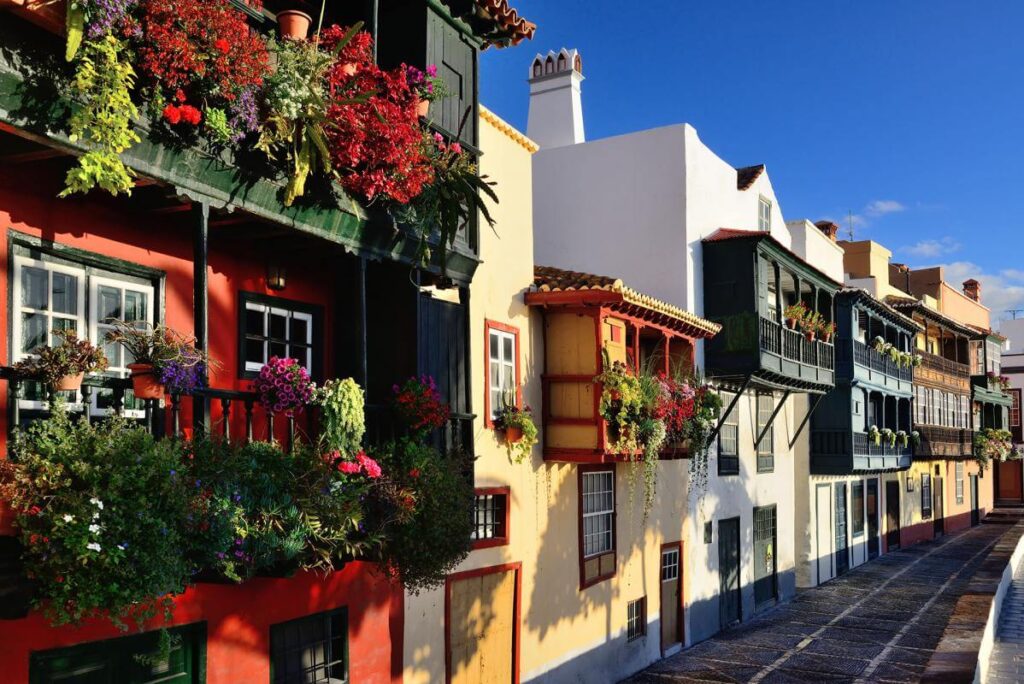
One of the most curious features of these balconies is that many were designed as intimate, enclosed spaces, known as traditional balconies. From there, families, especially women, could observe street life without being seen, respecting the modesty norms of the time. Over the centuries, the balconies evolved into open structures, adorned with pots, flowers, and vibrant colors that today give them a picturesque and cheerful appearance.
The most famous spot to see them is the section of Avenida Marítima where a unique collection of colonial balconies is preserved, some dating back to the 17th and 18th centuries. These wooden viewpoints, supported by corbels and crafted with artisanal techniques, have withstood hurricanes, marine humidity, and the wear and tear of time thanks to the quality of the tea wood and the care of generations of islanders.
Today, the balconies of Santa Cruz de La Palma are not just a memory of the past but a living heritage. They represent the fusion of functionality and beauty, of tradition and identity. For visitors, stopping in front of them is like traveling back in time, imagining the daily life of the port city, and understanding why Santa Cruz was known as “the city of balconies.”